Indoor Cat Enrichment: Beat Boredom With Simple Routines
How to enrich a bored indoor cat?
A bored indoor cat usually isn’t “being bad”—they’re looking for something to hunt, climb, solve, or explore. The best enrichment mixes movement, mental challenge, and choice, so your cat can act like a cat in a safe indoor space.
Build a daily “hunt, catch, eat” routine
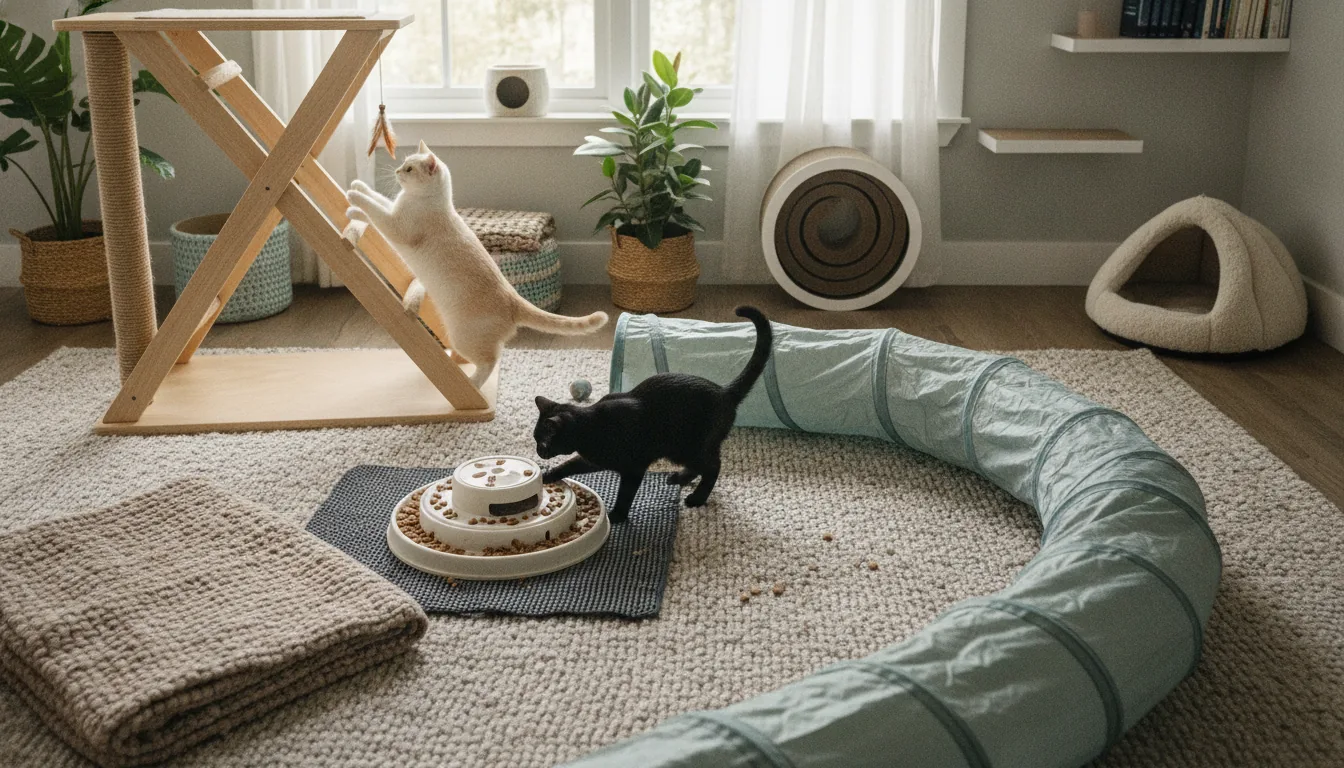
Turn meals into a game by using puzzle feeders, treat balls, or hiding small portions of kibble in a few easy-to-find spots. This taps into natural foraging and helps burn energy without needing more floor space.
Create vertical territory and observation posts
Cats feel stimulated when they can climb and watch. Add a cat tree near a window, wall shelves, or even a cleared bookshelf level with a soft mat. Rotate where the “best seat” is, so your cat keeps exploring.
Schedule short, high-quality play sessions
Two to three 5–10 minute sessions often work better than one long session. Use wand toys for chasing and pouncing, then “end the hunt” with a small treat to prevent frustration. Put toys away afterward to keep them exciting.
Offer novelty without chaos
Swap a few toys weekly instead of leaving everything out. Add safe, low-effort novelty like paper bags (handles removed), empty boxes with cut-out doors, or a new scratcher texture (cardboard vs. sisal).
Make enrichment calming, too
Some cats need decompression as much as action. Provide a quiet hideaway bed, a consistent nap spot, and a scratching station in a low-traffic area. A predictable routine can reduce attention-seeking mischief.
For more ideas and product-friendly setups, visit the full guide: How to Enrich a Bored Indoor Cat.
For Indoor Cat Enrichment: Beat Boredom With Simple Routines, the best answer depends on fit, material, care instructions, and how the product will be used day to day.
FAQ
What are signs my indoor cat is bored?
Common signs include excessive meowing, ambushing ankles, overgrooming, sleeping all day with bursts of nighttime energy, or knocking items down for attention. A sudden change in behavior can also indicate stress, so consider a vet check if it’s new or intense.











Leave a comment